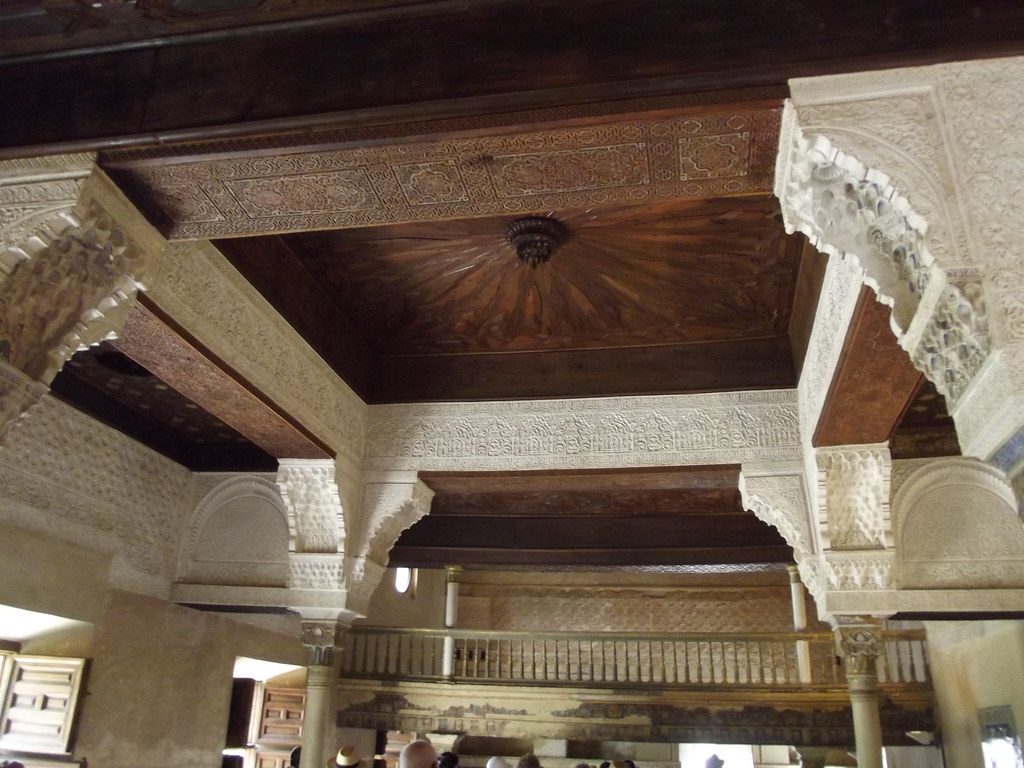
Mexuar
The oldest hall in the palace complex, originally used for meetings of the council of ministers.
Look up at the wooden ceiling to see complex geometric joinery.

The Nasrid Palaces form the beating heart of the Alhambra, a succession of three interconnected royal residences built by Granada's Islamic rulers between the 13th and 15th centuries. These chambers—Mexuar, Comares, and the Palace of the Lions—represent the pinnacle of Nasrid craftsmanship. Understanding what the Nasrid Palaces are helps visitors grasp why timed entry tickets exist and why these rooms require advance planning.
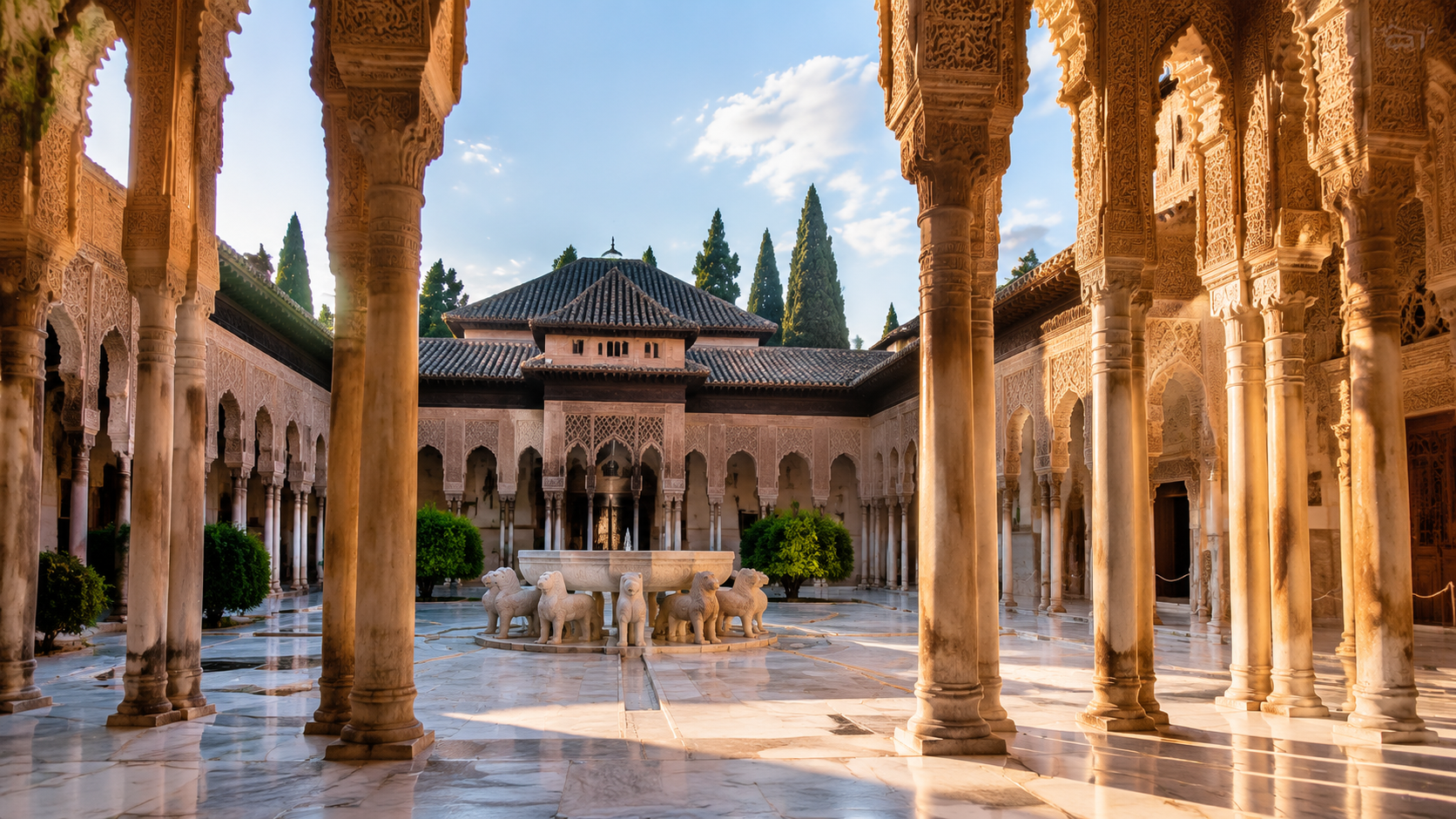
Quick answer
The Nasrid Palaces are a complex of three royal residences at the Alhambra: the Mexuar (administrative court and council chamber), the Comares Palace (official throne hall and diplomatic quarters built by Yusuf I), and the Palace of the Lions (private royal residence constructed by Muhammad V). Together they span roughly 140 years of construction and represent the most ornate Islamic palatial architecture surviving in Europe. Admission costs 22.27 EUR and requires a timed entry slot due to conservation limits.
More than 8,000 carved wooden panels ceiling the Hall of the Ambassadors—each a geometric puzzle fitted without nails. That density of craft defines what the Nasrid Palaces are: not a single monument but a layered chronicle of Granada's final Islamic dynasty, built room by room as sultans expanded their seat of power between 1238 and 1391. The three palaces unfold sequentially. Visitors enter through the Mexuar, the oldest section, where the sultan heard petitions and the council of ministers convened beneath muqarnas vaults. The route then opens onto the Comares Palace, anchored by the Torre de Comares—at 45 meters, the tallest tower in the Alhambra—whose interior throne room proclaimed the dynasty's reach across medieval Andalusia. Walls here carry Quranic inscriptions and geometric tile mosaics that took artisans years to complete. The third palace, the Palace of the Lions, shifts from public ceremony to private life: galleries surround the famed Court of the Lions, where 124 marble columns support arches so slender they seem to defy the weight above them. Muhammad V commissioned this residence after returning from exile in 1362, and its proportions reflect a ruler reasserting control. Ceiling stalactites, carved stucco filigree, and reflecting pools were not decoration alone—they encoded political messages. The Court of the Lions' fountain, supported by twelve stone lions, channeled water through the complex in a hydraulic feat that kept summer rooms cool and symbolized the rivers of paradise described in Islamic texts. When the Catholic Monarchs claimed Granada in 1492, they preserved these chambers largely intact, recognizing their artistic merit even as the Reconquista erased Islamic rule elsewhere. Today, the Patronato de la Alhambra restricts daily entries to preserve fragile plasterwork and wooden lattices. What are the Nasrid Palaces in practical terms? They are the reason the Alhambra enforces 30-minute entry windows and why tickets sell out weeks ahead during peak months. The route through all three palaces takes roughly 45 minutes at a measured pace, though many visitors spend longer photographing details or rereading wall inscriptions. No backtracking is allowed once you exit—the flow is unidirectional to manage crowds. Mobile photography is permitted, but tripods and flash units are banned to prevent damage to pigments and gilt. The palaces close to new entries 30 minutes before the site's official closing time, and re-entry is not permitted. Visitors planning their Alhambra day should reserve the Nasrid Palaces slot first, then build the rest of their itinerary around that fixed window.
“The Court of the Lions' fountain channeled water through the complex in a hydraulic feat that kept summer rooms cool and symbolized the rivers of paradise.”
The Nasrid Palaces represent the peak of Nasrid architecture, characterized by intricate geometric tilework, carved stucco, and meticulously planned courtyards. These interconnected royal residences offer a focused look at the administrative and private life of the Nasrid dynasty.
The oldest hall in the palace complex, originally used for meetings of the council of ministers.
Look up at the wooden ceiling to see complex geometric joinery.
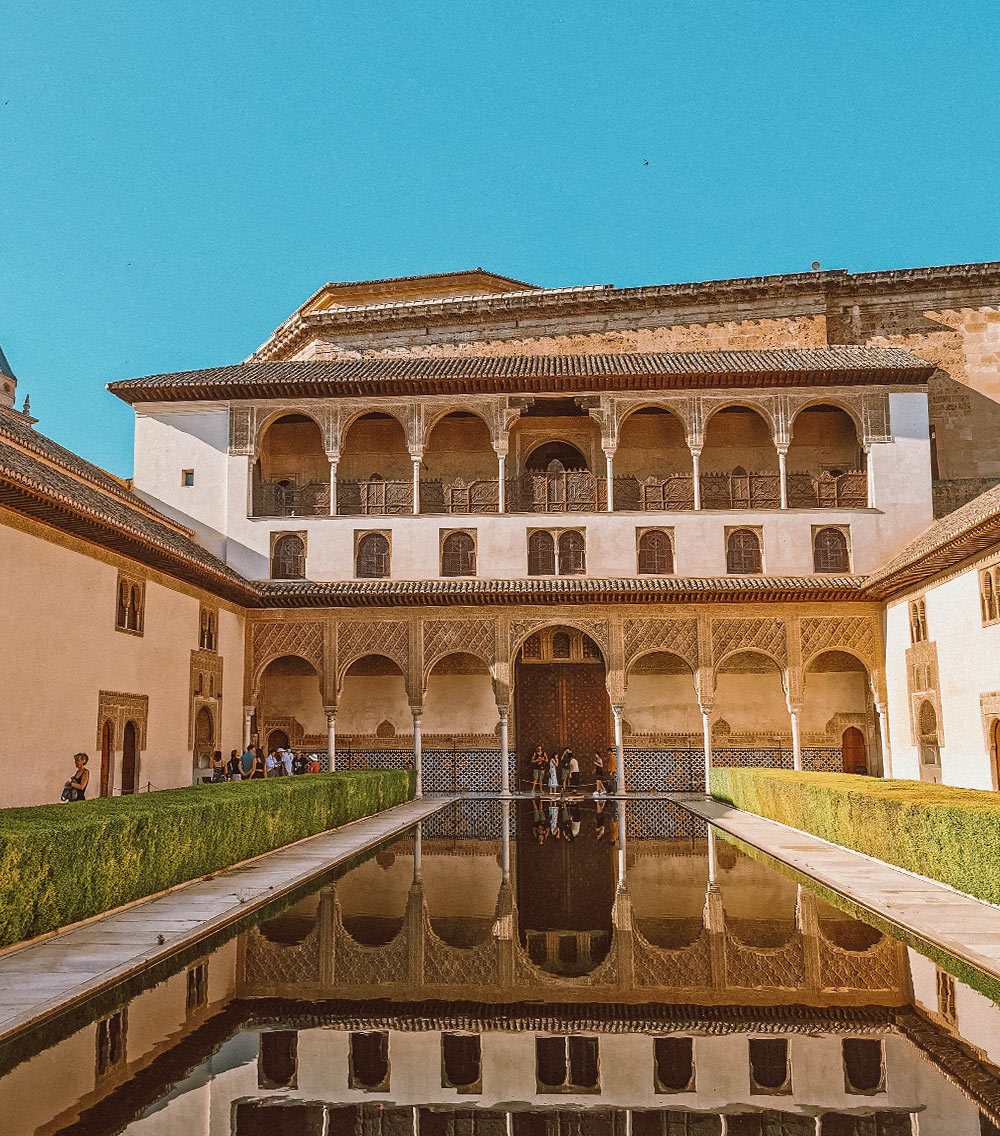
This central courtyard is defined by its large reflecting pool flanked by myrtle hedges.
Stand at the southern end for a perfect reflection photo.
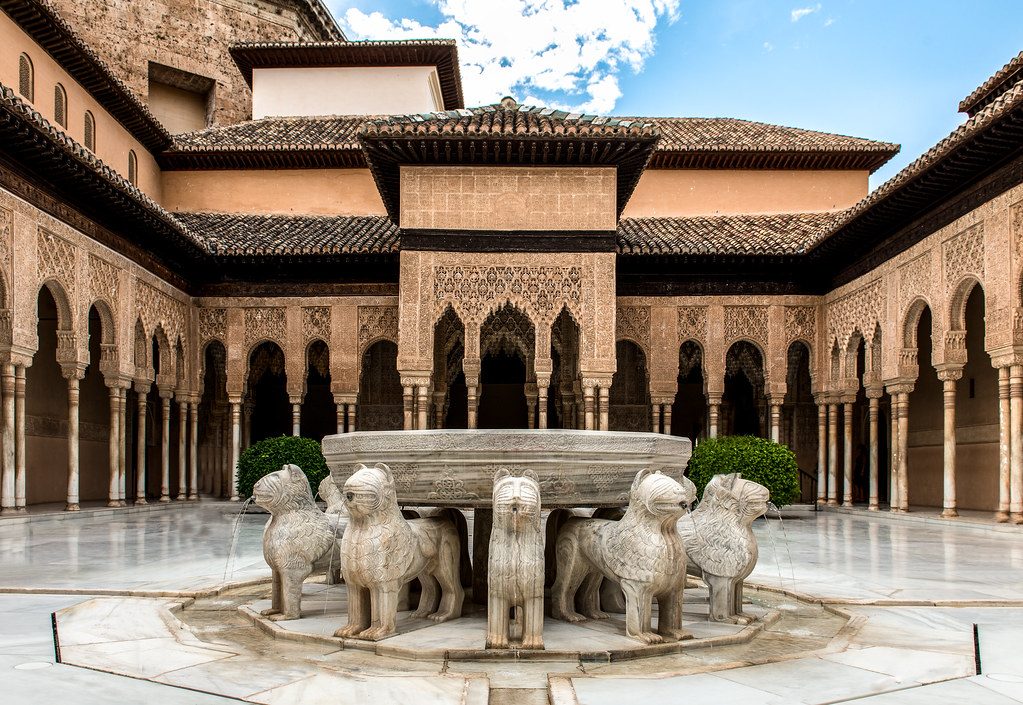
Famous for its central fountain supported by twelve marble lions, this area served as the private living quarters.
Notice the intricate muqarnas vaulting in the surrounding arched galleries.
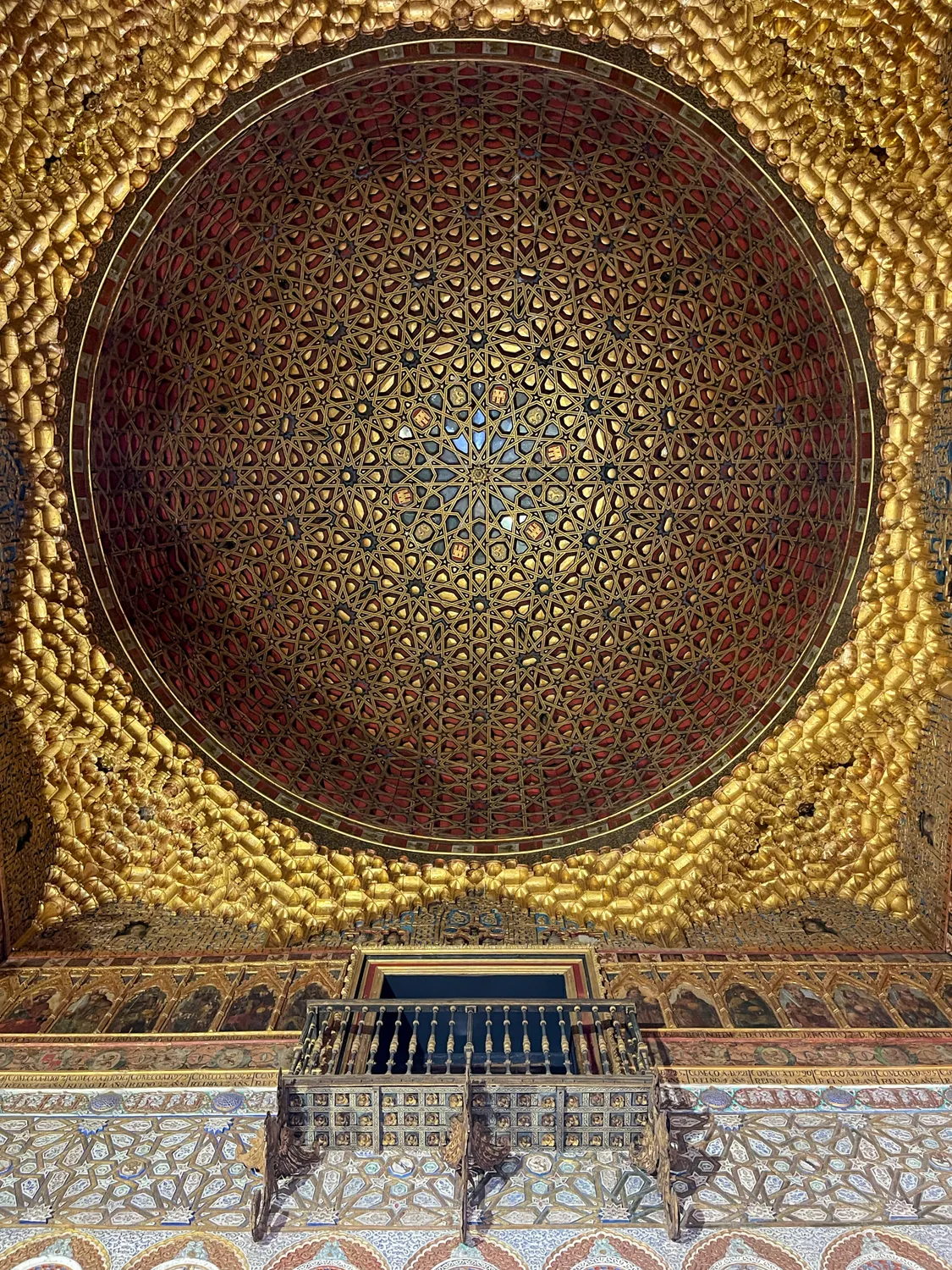
Located in the Comares Tower, this was the throne room featuring a dome representing the celestial spheres.
Observe the inscriptions in the stucco work along the walls.
The Nasrid Palaces operate on a consistent schedule throughout the week, welcoming visitors daily from morning until early evening.
The best arrival window is 08:30–10:00 to avoid peak midday heat and large tour groups for a more serene experience. Arriving early allows you to explore the architectural details before the site reaches maximum capacity.
—
Visiting midweek during the early morning hours provides the most quiet atmosphere.
Mild temperatures (15–24°C)
This period offers pleasant weather for walking the grounds before the afternoon sun intensifies.
Cooler temperatures (12–22°C)
Fall provides clear light for photography and comfortable conditions for extended exploration.
Very hot (25–35°C)
Early morning arrival is essential to bypass the intense heat and heavy midday visitor traffic.
Verdict: For the most balanced experience, aim for Tuesday to Thursday, arriving at the 08:30–10:00 window during April or October.
The Alhambra is located on Sabika Hill, overlooking the city of Granada. Visitors can reach the site via public bus, taxi, or a scenic walk from the city center.
Lines C30 or C32 from Plaza Nueva to the Alhambra-Generalife stop
From Granada city center to the Alhambra entrance
Walk from Plaza Nueva via Cuesta de Gomérez
The official address for the entrance is Calle Real de la Alhambra, s/n, 18009 Granada, Spain. Aim to arrive at the complex between 08:30–10:00 to facilitate your entry process.
Entry to the Nasrid Palaces requires advance planning and a few essential items on the day.
Everything you need to know about what are the nasrid palaces
The Nasrid Palaces represent the pinnacle of Islamic architecture in Spain, serving as the official residence of the Nasrid dynasty. Knowing what are the nasrid palaces allows visitors to appreciate the intricate stucco work, reflective pools, and geometric tile patterns that define this UNESCO World Heritage site.
Yes, the general admission fee of 22.27 EUR includes access to the Nasrid Palaces. This entry covers the complete Alhambra experience, though you must adhere to the specific time slot printed on your ticket to enter this portion of the site.
The Alhambra acts as a fortified city, showcasing the sophisticated cultural and artistic history of the Moorish rulers of Granada. Understanding what are the nasrid palaces helps frame the context of this expansive fortress, which also contains gardens and military fortifications.
Due to the delicate nature of the historical structures, site managers limit the number of people inside to preserve the ornate carvings and fragile interiors. If you are researching what are the nasrid palaces, keep in mind that the timed entry for this area is strictly enforced to manage flow and conservation.
The site is located at Calle Real de la Alhambra, s/n, 18009 Granada, Spain. You can reach the complex by bus, taxi, or a pleasant walk from the city center, though allowing extra time is advised to reach the entrance gates.
Yes, standard tickets provide access to the Generalife gardens, the Alcazaba fortress, and the Carlos V Palace in addition to the primary residential quarters. All these components are essential for those asking what are the nasrid palaces in the broader scope of the Alhambra experience.
Entry to this specific section of the Alhambra is highly regulated and requires a booked slot, as capacity is limited and tickets often sell out weeks in advance. It is not possible to enter the Palacios Nazaríes without an official admission ticket reserved for a specific time.
To ensure a more serene experience, the best arrival window is between 08:30 and 10:00. Arriving early helps you avoid the peak midday heat and large tour groups that populate these famous Andalusia attractions later in the day.
Alhambra and Nasrid Palaces Ticket with Audioguide
Read more GuideNasrid Palaces Ticket Prices
Read more GuideDo You Need to Book Alhambra Tickets in Advance?
Read more Tickets & toursAlhambra & Nasrid Palaces Tours
Read more GuideOfficial Nasrid Palaces Website Guide
Read more Tickets & toursLast Minute Nasrid Palaces Tickets
Read more